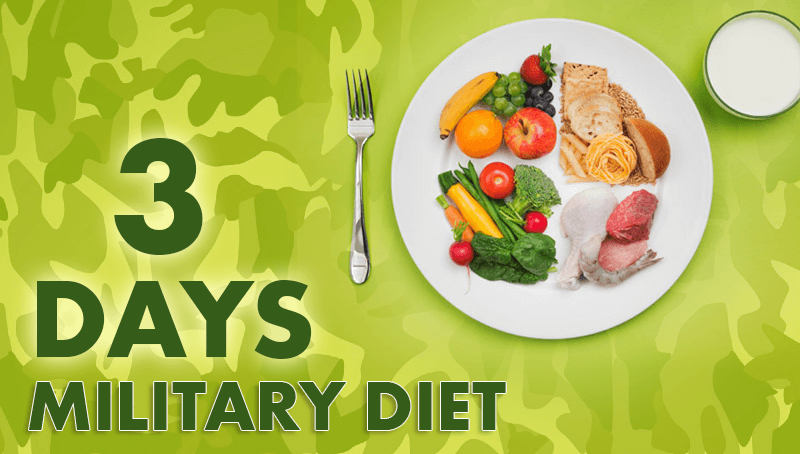
The military diet promises 10 pounds of weight loss in a single week from three days of strict eating followed by four days off.
Here is the honest version up front: you will probably see the scale drop, most of that drop is water, and no published study has ever tested this diet. It is not dangerous for most healthy adults over one week, but it is not the shortcut it claims to be either.
This guide walks through the full 3-day meal plan, the substitutions that actually make sense, the real math behind the 10-pound claim, and what to do instead if you want results that survive past day eight.
What Is the Military Diet?
The military diet is a 7-day crash diet split into two parts: three days of a fixed, very low-calorie menu (roughly 1,400, 1,200, and 1,100 calories) followed by four “off” days capped at about 1,500 calories. Supporters say you can repeat the cycle weekly until you hit your goal weight.
Despite the name, it has nothing to do with the military. No branch of the armed forces created it, uses it, or endorses it. The same three-day menu has circulated for decades under different borrowed names, including the 3-Day Diet, the Cleveland Clinic Diet, the Kaiser Diet, and the Birmingham Hospital Diet. None of those institutions created it either. Nobody knows who did.
That anonymity matters. A diet with no author, no institution, and no research behind it is asking you to trust a chain email. Worth remembering before day one.
How Does the Military Diet Work?
The plan’s promoters claim its odd food pairings (hot dogs with vanilla ice cream, tuna with toast) are “chemically compatible” combinations that switch on fat burning. Grapefruit supposedly alkalizes your body. Caffeine and calcium supposedly stoke your metabolism.
None of that holds up. Your kidneys and lungs keep your blood pH inside a tight range, no matter what you eat, so the alkalizing story falls apart on basic physiology. And no food combination has ever been shown to burn fat on its own. The ice cream is on the menu to make 1,100 calories feel less punishing, not because vanilla does something magical.
The actual mechanism is much simpler. The military diet works, to the extent it works, because it creates a steep calorie deficit. Most adults need somewhere around 1,600 to 3,000 calories a day, depending on age, size, and activity. Eat 1,100 to 1,500 calories for a week, and you will burn stored energy. That is the entire trick. Any menu with the same calorie count would produce the same result.
There is a catch, and it is the one crash diet never advertises. Cut calories that hard and your body responds by slowing its resting metabolic rate and, if protein stays low, breaking down muscle along with fat. Less muscle means you burn fewer calories at rest, which makes the weight easier to regain than it was to lose.
Who Can Follow the Military Diet?
The Military Diet plan is designed for anyone who wants to enjoy a quick fix of their weight in just a short period. Due to its restrictive nature and low-calorie intake, it is generally not recommended for individuals with certain health conditions, such as diabetes, heart disease, or eating disorders. Additionally, pregnant or breastfeeding women should avoid this diet.
Who can follow the Military Diet:
- Healthy adults without any underlying health conditions
- Individuals seeking short-term weight loss
- Those who can adhere to a strict meal plan
Who should avoid the Military Diet:
- Individuals with diabetes, heart disease, or other chronic health conditions
- Pregnant or breastfeeding women
- Children and adolescents
- People with a history of eating disorders
- Individuals who cannot tolerate a low-calorie diet
If you’re considering trying the Military Diet, it’s crucial to consult with your doctor or a registered dietitian to ensure it’s safe for you. They can assess your overall health and provide guidance on whether this diet is appropriate for your needs and goals.
3 Day Diet Menu Plan
The first three days follow a fixed menu of 16 foods split across breakfast, lunch, and dinner. No snacks. Portions shrink each day, so calories fall from roughly 1,400 on day one to 1,100 on day three.
Day 1 (about 1,100 calories)
For day 1, you are required to consume about 1,100 calories. This includes the following:
Breakfast

- Half a grapefruit
- A slice of toast with two tbsp. of peanut butter
- A cup of coffee
Lunch

- Half a cup of tuna
- One slice of toast
- One cup of coffee
Dinner

- One small apple
- 85 grams of meat and a cup of green beans
- Half a banana
- A cup of vanilla ice cream
Calories for Day One: approx 1100
| Food Item | Qty | Calories |
|---|---|---|
| Grapefruit | 1/2 | 52 |
| Toast | 2 Slice | 150 |
| Peanut Butter | 2 Tablespoons | 188 |
| Coffee or Tea | 1 cup (w/o sugar) | 5 |
| Tuna | 1/2 cup | 89 |
| Banana | 1/2 | 53 |
| Apple | 1 small | 55 |
| Meat | 85 grams | 122 |
| Vanilla Ice Cream | 1 cup | 289 |
| Green Beans | 1 cup | 34 |
| Green bean | 1 cup | 31 |
Day 2
The second day gets interesting and you need to consume 1,250 calories.
Breakfast

- One piece of hard-boiled egg
- One slice of toast
- One-half banana
- A cup of coffee
Lunch

- One hard-boiled egg
- 5 pieces of saltine crackers
- One cup of cottage cheese
- One cup of coffee
Dinner

- Two hotdogs
- One-half cup of broccoli and carrots
- One-half banana
- One-half cup vanilla ice cream
Calories for Day Two: approx 1250
| Food Item | Qty | Calories |
|---|---|---|
| Egg | 2 | 156 |
| Toast | 1 Slice | 75 |
| Banana | 1 | 106 |
| Coffee or Tea | 2 cup (w/o sugar) | 10 |
| Cottage Cheese | 1 cup | 232 |
| Saltine Crackers | 5 pieces | 64 |
| Vanilla Ice Cream | 1/2 cup | 144 |
| Hot Dogs | 2 (w/o buns) | 350 |
| Broccoli | 1 cup | 54 |
| Carrots | ½ cup | 41 |
Day 3
During the third day of the Military Diet plan, the dieter is required to consume around 1,000 calories.
Breakfast
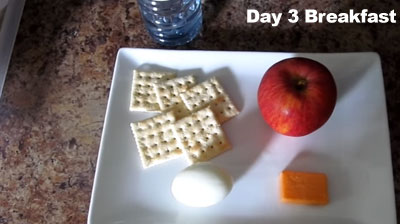
- 1-ounce cheddar cheese
- 5 pieces of saltine crackers
- 1 small apple
- 1 cup of tea or coffee
Lunch

- 1 slice of toast
- 1 egg, cooked
- 1 cup of coffee
Dinner

- One-half banana
- 1 cup tuna
- 1 cup of vanilla ice cream
Calories for Day Three: approx 1000
| Food Item | Qty | Calories |
|---|---|---|
| Cheddar Cheese | 1 ounce | 113 |
| Saltine Crackers | 5 pieces | 64 |
| Apple | 1 small | 55 |
| Egg | 2 | 156 |
| Toast | 1 slice | 75 |
| Vanilla Ice Cream | 1 cup | 289 |
| Tuna | 1 cup | 179 |
| Banana | 1/2 | 53 |
| Coffee or Tea | 2 cup (w/o sugar) | 10 |
You can drink as much coffee as you want, but you should not add cream or sugar. If you don’t like any food on this list check out our military diet substitution ideas that may work for each day’s food items.
Click here to download a printable 3-day military diet.
The 4 Days Off
Days four through seven have no fixed menu. The plan asks you to keep total intake under about 1,500 calories per day, which is still a deficit for almost every adult. In other words, the “off” days are not really off. You are dieting all seven days, just with more freedom in the second half.
If you plan those four days around lean protein, vegetables, fruit, whole grains, and legumes, you will feel dramatically better than you did on the saltine-and-hot-dog stretch. Treat them as recovery days, not reward days.
What You Can Drink on the Military Diet
Water is unlimited, and you should lean on it hard since the menu is low in fluid-rich foods. Herbal tea without a sweetener is also unrestricted. Coffee and caffeinated tea are allowed, black only. Cream and sugar add calories the plan has no room for; if you need sweetness, a small amount of stevia is the one sweetener the plan permits.
Skip alcohol, juice, soda, and diet soda for the week. The first three add calories, and even zero-calorie sodas tend to feed sugar cravings at exactly the moment your willpower is thinnest.
3 Day Military Diet Shopping List
| 2 Apples | 2 Cup Green Beans |
| 2 Bananas | 2 (w/o buns) Hot Dogs |
| 1 cup Broccoli | 85 grams Meat |
| ½ cup Carrots | 2 Tablespoons Peanut Butter |
| 1 ounce Cheddar Cheese | 10 pieces Saltine Crackers |
| 5 cup (w/o sugar) Coffee or Tea | 4 Slice Toast |
| 1 cup Cottage Cheese | 1.5 cup Tuna |
| 4 Egg | 2.5 cup Vanilla Ice Cream |
| ½ Grapefruit |
Military Diet Substitutions | Best Food Alternatives During 3 Day Diet

The plan allows swaps for allergies, taste, and vegetarian or vegan eating, but its official substitution rules mix sensible advice with myths. The real rule is simple: match the calories and, where you can, the protein. The “chemical compatibility” of specific foods is not a real thing, so you do not need to obey it.
One myth needs calling out directly. The plan famously says you must never swap grapefruit for an orange, and that grapefruit-haters should drink half a teaspoon of baking soda in water instead to keep the body “alkaline.” Ignore that advice. Your body regulates its own pH regardless of what you eat, baking soda does nothing for fat loss, and regular doses of it add sodium you do not need. An orange, a couple of mandarins, or any fruit around 40 to 50 calories replaces half a grapefruit just fine.
Here are calorie-sensible swaps for the rest of the menu:
| Menu item | Sensible substitutes |
|---|---|
| 2 tbsp peanut butter | Almond butter, sunflower seed butter, soy butter, or hummus (same amount) |
| 1 slice of toast | 2 rice cakes, 1 small tortilla, or half a cup of whole-grain cereal |
| Half cup / 1 cup tuna | Grilled fish, chicken breast, cottage cheese, tofu, or a handful of almonds (match calories) |
| 3 oz meat | Lentils, beans, tofu, or portobello mushrooms for vegetarians |
| 1 cup green beans | Spinach, lettuce, tomatoes, or any non-starchy vegetable, same volume |
| Broccoli and carrots | Cauliflower, asparagus, Brussels sprouts, squash, celery, or bell pepper |
| 2 hot dogs | Turkey dogs, tofu dogs, or (better) 2 eggs or 150 g of chicken; hot dogs are the menu’s weakest item, high in sodium and processed meat |
| 1 oz cheddar cheese | Cottage cheese, 1 egg, or soy cheese |
| 1 egg | 1 cup of milk, a quarter cup of nuts or seeds, or 2 slices of bacon (though nuts are the healthier pick) |
| 5 saltine crackers | 2 rice cakes or 1 slice of plain toast |
| 1 cup coffee | Green tea, no sweetener needed |
| Vanilla ice cream | 1 cup of plain or vanilla yogurt, or fruit-flavored almond milk with matching calories |
A dietitian’s honest note on the hot dogs: processed meats are linked to enough health problems that swapping them out is an upgrade, not a compromise. The plan will not fall apart if you eat eggs or chicken instead. It was never held together by chemistry in the first place.
Can You Really Lose 10 Pounds in a Week?
You can lose 10 pounds of scale weight. You cannot lose 10 pounds of fat. The distinction is the whole story, so here is the math.
One pound of body fat stores roughly 3,500 calories. Take a person who maintains their weight at 2,200 calories a day and run them through the full week: the three strict days create a deficit of about 2,900 calories, and four off days at 1,500 add another 2,800. Total weekly deficit: roughly 5,700 calories. That converts to about 1.5 to 2 pounds of actual fat.
So where does the rest of a dramatic scale drop come from? Water. When you slash calories and carbs, your body drains its glycogen stores, and every gram of glycogen holds 3 to 4 grams of water with it. Lower sodium intake and a lighter gut add to the effect. That water weight returns within days of normal eating, which is exactly why crash dieters watch the scale bounce straight back.
No published research has ever studied the military diet specifically, so every number its promoters advertise is marketing, not evidence. Two pounds of fat in a week is a genuinely fast rate of loss. It is just not ten.
What the Three Days Actually Feel Like
Nobody warns you about this part, so consider this the field report your body will file.
Day one is usually manageable. Around 1,400 calories with peanut butter and a real dinner keeps most people functional, though the no-snacks rule starts to bite by late afternoon.
Day two is where it gets hard. You are down to 1,200 calories, the meals are smaller, and if you normally drink sweetened coffee, a caffeine-adjustment headache may join the hunger. Expect irritability and an energy dip in the afternoon. This is also when sleep can turn restless; going to bed hungry does that.
Day three is the grind. At 1,100 calories, lunch is literally an egg and a slice of toast. Dizziness, brain fog, and a short temper are common, and workouts will feel noticeably weaker because your glycogen is running low. If you feel faint rather than just hungry, eat. No three-day menu is worth passing out over.
None of this means the diet is injuring you over a single cycle. It means the diet is running on deprivation, and deprivation has a mood.
Who Should Not Try the Military Diet
For a healthy adult, one week at these calorie levels is unpleasant but usually tolerable. For some people, it is genuinely unsafe, and this list is not negotiable:
- Anyone with a history of an eating disorder or disordered eating. Rigid rules, forbidden foods, and rapid scale swings are known triggers, and research links fad dieting patterns to disordered eating behaviours.
- People with diabetes, especially those on insulin or other glucose-lowering medication. This calorie level and carb pattern can cause dangerous blood sugar drops without medical supervision.
- Anyone with kidney disease or gout. The diet’s protein load raises the acid burden on the kidneys.
- Pregnant or breastfeeding women, full stop. Both states raise calorie and nutrient needs well above what this plan provides.
- Children and teenagers, whose growth requires steady energy and nutrients.
- People with heart conditions or anyone taking regular prescription medication, without a doctor’s sign-off first.
If you fall anywhere on that list and still want structured weight loss, a registered dietitian can build you a plan that works with your health instead of gambling against it.
What to Eat After Day 3 (So the Weight Does Not Snap Back)
The week after a crash diet decides whether any of it mattered. Most people finish day seven, return to exactly their old eating, regain the water weight within days, and conclude the diet “stopped working.” The diet did what a deficit does. The exit was the failure.
A better landing looks like this:
Expect 1 to 3 pounds back immediately. That is glycogen and water refilling, not fat. Do not let it push you into another restriction cycle.
Climb, do not leap. Add 150 to 200 calories a day over the following week or two until you reach a sustainable intake, rather than jumping from 1,100 straight back to 2,500.
Anchor every meal with protein. Aim for 25 to 30 grams per meal (eggs, fish, chicken, lentils, yogurt). Protein protects the muscle a crash diet threatens and keeps you full enough to avoid the rebound binge.
Lift something. Two or three strength sessions a week is the single best insurance against the muscle loss and metabolic slowdown that follow severe restriction.
A steady loss of 1 to 2 pounds per week from here beats another military diet cycle in every measurable way. See our guide on healthy rate of weight loss for how to set that up.
A Smarter 3-Day Reset
If what attracted you to the military diet was the structure (three days, fixed meals, no decisions), you can keep the structure and drop the extremes. A moderate plan around 1,600 to 1,800 calories still produces a deficit for most adults, without the day-three fog.
A sample day:
- Breakfast: 2 eggs scrambled with spinach, half a cup of oats with berries
- Lunch: Grilled chicken or tuna salad with mixed vegetables and a tablespoon of olive oil dressing
- Snack: Plain yogurt with a small handful of nuts
- Dinner: Baked fish or a lentil curry, 1 cup of vegetables, half a cup of rice
Same simplicity, roughly triple the fiber, more than double the protein of the military diet’s worst day, and no saltine-cracker lunch. Run it for three days and you will lose real fat at a slower, keepable pace. Our high-protein meal plan breaks this into a full week if you want to extend it.
Military Diet Results
Just like any other diet plan, the Military Diet may work for some but not for all. It is categorized as a low-calorie diet and not all people can take it, especially those having special health conditions.
Although it is easy to adapt and implement this diet plan, it can’t sustain long-term changes in your weight and health.
3 Day Military Diet Before and After Pictures

FAQ About the Military Diet
Is the military diet safe?
For a healthy adult doing one 7-day cycle, it is more unpleasant than harmful. The risks stack up with repetition: nutrient gaps, muscle loss, a slowed metabolic rate, and a warped relationship with food. Health professionals consistently advise against running repeated cycles.
How much weight will I actually lose?
Expect roughly 1.5 to 2 pounds of fat and anywhere from 2 to 6 pounds of water, depending on your size and starting diet. The water portion returns when the week ends.
How often can you repeat the military diet?
The plan says weekly, indefinitely. Dietitians disagree. Repeating a very low-calorie cycle month after month is where the real harms (deficiencies, muscle loss, rebound eating) take hold. If one cycle did not get you where you want to be, that is your sign to switch to a sustainable deficit, not to run it again.
Is the military diet intermittent fasting?
No. Intermittent fasting restricts when you eat; the military diet restricts how much. You still eat three meals a day on this plan, just very small ones.
Why am I not losing weight on the military diet?
The usual suspects: your maintenance calories are lower than average (smaller or lighter people run smaller deficits), the high-sodium menu items like hot dogs and saltines are holding water, or the off days quietly crept past 1,500 calories. It is rarely a mystery and never about food chemistry.
Should You Try the Military Diet? A Dietitian’s Verdict
The military diet is a repackaged crash diet with a borrowed name and no evidence file. It will move the scale for a week because any severe calorie cut moves the scale for a week. It will not teach you anything you can use in week two, and its signature claims (special food combinations, alkalizing grapefruit, 10 pounds of fat in 7 days) do not survive contact with basic physiology.
If you have a healthy relationship with food, no medical conditions, and an event on Saturday, one cycle will not wreck you. For anything beyond that, a moderate deficit with enough protein, some strength training, and patience outperforms this plan on every timeline longer than a week. Talk to your doctor or a registered dietitian before starting any diet this restrictive, and if you have ever struggled with disordered eating, give this one a hard pass.
This article is for general information and is not a substitute for personalized medical or dietetic advice.

is a registered dietitian with over 15 years of experience in nutrition, personalised diet planning, and wellness coaching. She holds a Master’s degree in Nutritional Science from University of Dhaka and specialises in evidence-based nutrition strategies that support long-term health and sustainable lifestyle changes. Mounota regularly writes research-backed health and nutrition content for online publications and wellness platforms.
Leave a Reply